
Great coaching requires a personal touch. Running a coaching business doesn’t require every task to be done manually. Here are seven things personal trainers can automate to save hours each week without making the client experience feel less personal.
Programming workouts. Chasing check-ins. Sending reminders. Processing payments. Updating spreadsheets. Answering the same questions over and over.
Individually, these tasks don't seem like much.
But when you have 20, 30 or 50 clients, those five-minute tasks can quickly consume hours of your week.
The answer isn't to work longer.
It's to automate the repetitive work so you have more time for the work that actually requires you.
Here are seven places to start.
A new client signs up. What happens next?
If your answer involves manually sending five different emails, payment links, questionnaires and documents, there's an easier way.
Build a repeatable onboarding process.
Once someone becomes a client, they should automatically receive everything they need to get started: forms, expectations, app access, assessments and next steps.
You can still send a personal welcome message or jump on a kickoff call.
Automate the process, not the relationship.
Monday morning arrives and half your clients haven't submitted their check-ins.
Now you're chasing people.
A simple automated reminder can solve much of this.
Set check-ins for specific days and have clients reminded when they're due. You can then spend your time reviewing their progress instead of reminding them to submit it.
Consistency becomes much easier when the system does the chasing for you.
Getting paid shouldn't require sending awkward messages every month.
Recurring payments can automate billing for ongoing coaching memberships, while automatic reminders can alert clients when a payment fails or a subscription is approaching renewal.
This isn't just about saving time.
It also makes your business feel more professional and gives you a clearer picture of recurring revenue.
If you're still sending workouts as PDFs or manually copying programs for every client, this is one of the biggest opportunities to save time.
Create templates for the programs you use frequently.
Then customize them based on the individual client's goals, experience, equipment and limitations.
You're not replacing individualized programming.
You're eliminating the repetitive work required to build it.
If ten clients need similar three-day strength programs, you shouldn't need to start from a blank page ten times.
Clients want to know they're progressing.
But manually collecting weights, measurements, workout performance and adherence across multiple spreadsheets becomes difficult as your roster grows.
Centralizing this information allows progress to be tracked as clients train.
That means when check-in day arrives, you're not spending the first 15 minutes trying to figure out what happened.
You already have the information you need.
Now you can focus on what it means.
“How much protein should I eat?”
“Can I swap this exercise?”
“What should I do when I'm travelling?”
“What happens if I miss a workout?”
You'll probably answer versions of the same questions hundreds of times throughout your coaching career.
Create resources that answer the most common ones.
That could mean a client resource library, course, FAQ section or community where clients can easily find information.
This doesn't mean ignoring questions.
It means giving clients immediate access to answers while freeing you to spend more time on situations that actually require individual coaching.
This one needs balance.
You should never automate your entire relationship with a client.
But you can automate the moments that make it easier to stay engaged.
Workout reminders, progress milestones, scheduled check-ins and community challenges can create consistent touchpoints between you and your clients.
Then your personal messages become more meaningful because they aren't buried underneath administrative communication.
There's a big difference between automating your business and automating your relationships.
Clients still want a coach who understands them.
They want feedback when they're struggling. Adjustments when life changes. Encouragement when progress feels slow. Someone who notices when something isn't right.
That's where your time should go.
Technology should handle the repetitive work surrounding those moments.
Platforms like Upliftt bring client management, programming, nutrition, messaging, payments, check-ins and community into one place, helping coaches reduce the number of manual tasks required to run their business.
The result isn't less coaching.
It's more time to actually coach.
Don't try to automate your entire business overnight.
Instead, look at your last week and ask:
What did I spend time doing more than once?
If you spent an hour chasing check-ins, automate reminders.
If you built the same workout four times, create a template.
If you answered the same question five times, create a resource.
Start by getting back one hour every week.
Then another.
Because as your coaching business grows, your most valuable resource isn't another app, another spreadsheet or another productivity hack.
It's your time.
Spend less time on admin. Spend more time coaching.
Upliftt brings the tools you need to manage clients, workouts, nutrition, payments, messaging and more into one coaching platform.

Clients rarely quit on the day they cancel ... they drift for weeks first, usually right around the 90-day mark when novelty runs out and progress slows. Here's what the drift looks like, the four signals that show up in your check-ins before anyone asks for a refund, and the weekly rhythm that turns a three-month client into a two-year one.
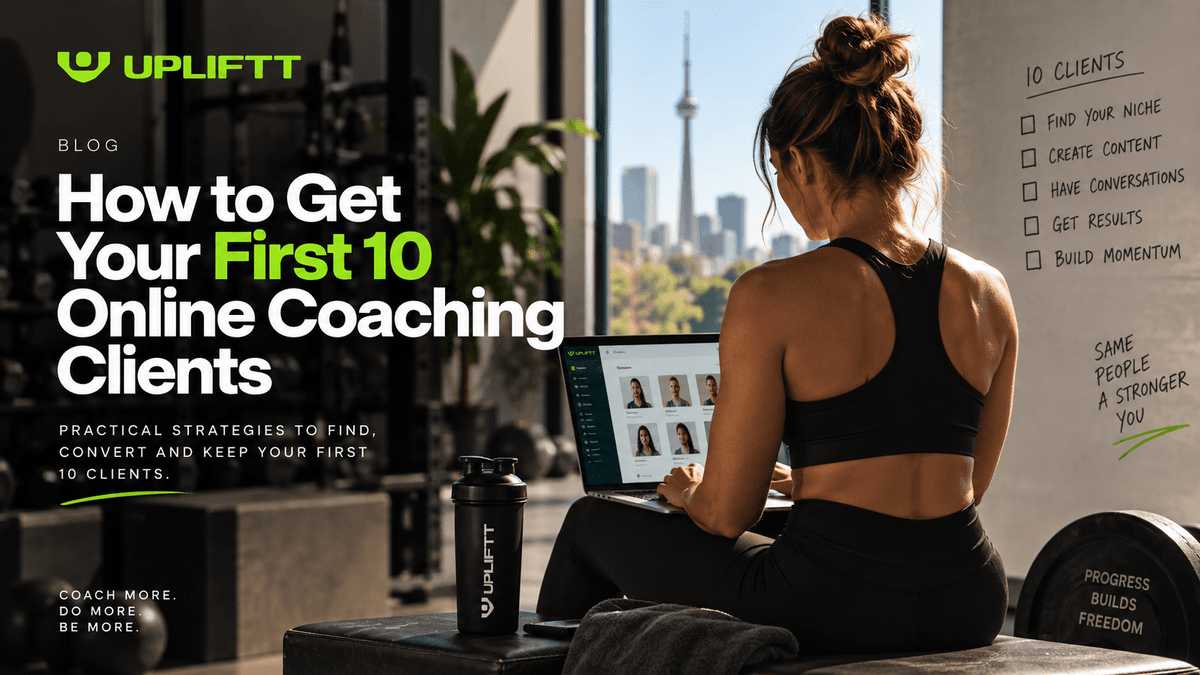
Getting your first online coaching clients can feel like the hardest part of building a fitness business. Here’s a practical playbook for landing your first 10 clients, building momentum, and creating the foundation for a coaching business that can grow.